The Aegean coastline is the region where Turkey is in closest touch with the ancient world. Along this line, where the Menderes and Küçük Menderes plains open to the sea, the remains of Ionian cities, Byzantine monasteries, Ottoman caravanserais and modern marinas follow one another at intervals of a few kilometres. With olive groves and pine forests reaching down to the shore, the geography offers a long summer season as well as a climate suited to birdwatching in spring and nature walks in autumn. Aydın is the province on this coastal strip that is home both to farming plains and to one of its busiest port towns.
Kuşadası, in Aydın, is not only the province's sole coastal district but also home to one of Turkey's busiest cruise ports. Bearing the traces of ancient Neopolis and of the Genoese Scala Nuova, the town centre is on one side a historic townscape with the streets of Kaleiçi, and on the other a lively resort with its hotels and seafront. The district and its close surroundings bring together very different stops, from a national-park peninsula to caves, from monastery ruins to long sandy beaches. Below you will find the highlights among the places to visit in Kuşadası, what each offers and what to bear in mind when visiting.
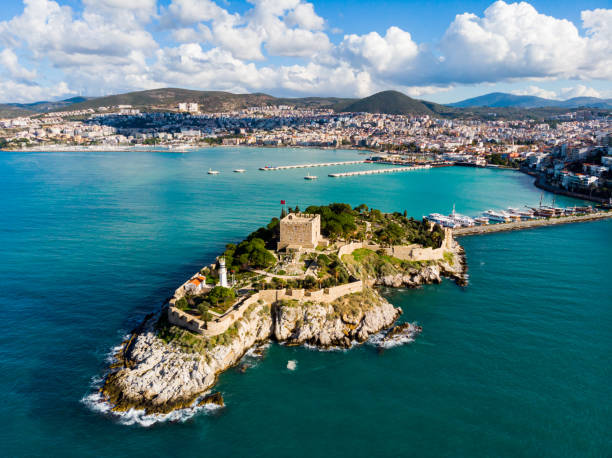
Pigeon Island Castle (Güvercinada)
The symbol of Kuşadası, Güvercinada is a small islet connected to the shore by a 350-metre causeway. The castle on it was built in the 15th century as a lookout against pirate raids and was repaired and enlarged in later centuries under the Ottomans. The walls surrounding the islet largely stand today, and from the bastions the whole bay can be seen. Thanks to the garden layout, tea garden and shaded seating areas inside, the islet is suited to resting as well as sightseeing. Walking along the causeway you are accompanied by the marina on one side and the open sea on the other. The most popular hours are close to sunset; this moment, when the light turns the stone of the walls orange, is the best time to photograph the historic walls of Kuşadası. Entry is usually free, and the islet is within walking distance of the centre.
Zeus Cave
In the Güzelçamlı area, very close to the entrance of the Dilek Peninsula, Zeus Cave holds a small lake fed by underground springs. Hidden among the rocks, the cave's water appears an unusual green-blue owing to the mixing of fresh and salt water. According to local legend, Zeus used this cave to hide from his brother Poseidon. As the water reaches several metres deep in places and stays quite cold even in midsummer, swimming is allowed but calls for caution. Shaded and cool, the cave makes a good stop in the hot midday hours. With its car park and the snack stands around it, it is easy to reach; those heading to the national park usually add it to their route first.
Davutlar Beach
About 15 kilometres from the centre of Kuşadası, Davutlar has one of the district's longest sandy shores. The sea stays shallow for a long way out, which makes the beach particularly safe for families with children. Along the shore, public sections, municipal beaches and managed areas exist side by side, offering options for different budgets. The area is also known for its thermal springs, and the facilities around them welcome visitors all year round. As Davutlar lies on the road to the Dilek Peninsula, it fits comfortably into the same day as a national park trip. It is the right address for those seeking a calmer Kuşadası beach experience than the centre. By public transport, the dolmuş from the centre takes about half an hour.
Dilek Peninsula – Büyük Menderes Delta National Park
Protected since 1966, the national park is the most valuable natural area around Kuşadası. Covering some 28,000 hectares, it embraces both the forested slopes of the Dilek Peninsula and the wetlands of the Büyük Menderes Delta. Along the single road on the peninsula side lie, in order, the bays of İçmeler, Aydınlık, Kavaklıburun and Karasu; with their clear water and pebbly character, these bays count among the cleanest beaches of the region. The area is known to shelter wild boar, jackals, badgers and the rarely seen Anatolian leopard; the delta section is a haunt of species such as flamingos and Dalmatian pelicans. Entry to the park is charged, vehicle capacity is limited, and in summer the quota can fill before noon. For the canyon walking trails, arrive in the morning hours.
Öküz Mehmet Pasha Caravanserai
Rising right beside the harbour entrance, the caravanserai was commissioned at the start of the 17th century by Öküz Mehmet Pasha, grand vizier of the period. The two-storey building with its courtyard and thick stone walls is the most tangible proof of Kuşadası's trade volume in the Ottoman era. The inscription above the gate, the crenellated walls and the arcades of the inner courtyard are preserved in their original form. The building served for many years as a hotel, and was later restored and opened to cultural events and commercial businesses. The gate opposite the caravanserai opens into the Kaleiçi quarter; the Kuşadası bazaar line starting from this direction is known for souvenir shops and leather goods. On the list of historic places in Kuşadası it is the easiest stop to reach after the port, and the first building seen by visitors arriving by ship.
Kurşunlu Monastery
About 10 kilometres from the centre, on a hill among the pine forests, Kurşunlu Monastery is a building complex from the Byzantine period. Its construction is accepted as dating to the 12th century. It is thought to take its name from the lead sheathing once used on its roof. The remains — church, courtyard, chapel and monks' cells — largely stand today; the alternating brick-and-stone masonry of the walls clearly reflects the construction technique of the period. Thanks to its hilltop position it commands a wide view over the forest to the bay, serving as a viewpoint for Kuşadası. The road to the site is narrow and winding; morning or late afternoon is better for a visit, for both the light and the coolness.
Kuşadası Port and Marina
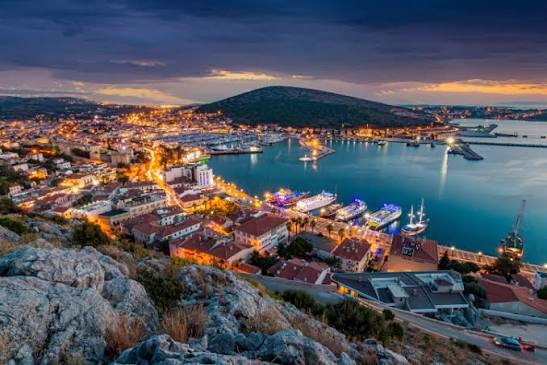
One of the busiest cruise ports of the Aegean, Kuşadası Port hosts giant passenger ships throughout the season; most visitors who want to see Ephesus enter through this gateway. The marina beside the port is the regional centre of yacht tourism and serves all year round with a capacity of hundreds of boats. Restaurants, cafés and shops line the marina; in the evening, when the boat lights strike the water, this strip is the district's most pleasant walking route. Daily boats departing from here sail to the surrounding bays. Kuşadası's entertainment venues are largely gathered between the marina and Bar Street; the live-music venues stay open until late at night in season.
Neopolis Ancient City
Considered the ancestor of today's Kuşadası, Neopolis was founded north of the centre, around Yılancı Burnu. Its name means "new city" in Greek, and the city is thought to have taken shape in the Hellenistic period as a continuation of the settlements attached to the Panionion league. On the site you can see traces of defensive walls, rock tombs, cisterns and harbour structures. As the remains are not grand on the scale of Ephesus or Miletus, visitor numbers are low; in return, its seaside position and quiet offer a peaceful visit. Since excavation and conservation work continues, some sections may be closed. Among the places near Kuşadası, this is the ancient site most easily walkable from the centre.
Panionion Ancient Sanctuary
Located at the Otomatik Hill site above Güzelçamlı, the Panionion is the sacred ground where the ten Ionian cities held their joint political and religious assemblies. This league is accepted as one of the region's most important organisations of antiquity; the cities gathered here, took common decisions and celebrated the Panionia festivals held in honour of Poseidon. A stepped assembly structure and altar remains have been documented on the site. As the remains are today largely underground, a visit means seeing a historic spot rather than an archaeological site. Even so, the view opening from the hill to the Aegean and the meaning the site carries make it worth the trip for those interested in history. Access is by private car, and the last stretch of road is unpaved.
Ferry Crossing from Kuşadası to Samos
If you wish to extend your Kuşadası trip with a one-day island tour, the Greek island of Samos on the opposite shore is only a short sea journey away. The crossings from Kuşadası Port to Vathi (Samos) Port, operated with the assurance of Tilos Travel, use high-speed ferries and take about 40 minutes. Serving between March and November, the route allows a morning departure and evening return, so it is often chosen by those planning a day trip. On Samos, the neoclassical buildings around the harbour, the town of Pythagorio where Pythagoras was born, the Temple of Heraion and the island's wine production rooted in its viticulture tradition are the highlights. As this is an international route, a passport is required; buying tickets in advance in season and being ready at the port well before departure are recommended.
| Crossing Time | About 40 minutes |
|---|---|
| Ferry Type | High-speed ferry |
| Departure Port | Kuşadası Port |
| Arrival Port | Vathi (Samos) Port |
| Season | March - November |
Turkish citizens can cross to Samos with a door visa (visa on arrival); see our door visa page for the required documents and the application process.
Eating, Drinking and Travel Tips in Kuşadası
The district's cuisine is a union of the Aegean's wild-herb culture and its seafood. Seasonal herbs such as radika, şevketibostan, sea beans and turp otu, olive-oil dishes and fresh fish are the first things that come to mind at the mention of places to eat in Kuşadası. The meyhanes lining the narrow streets of Kaleiçi, the fish restaurants around the marina and the village-breakfast spots towards Güzelçamlı answer different expectations. When planning your itinerary, keep in mind that the ancient city of Ephesus, the House of the Virgin Mary, Şirince and the Miletus-Priene-Didyma line are within an hour's distance. That way you can easily combine a seaside holiday with ancient city visits in the same week, using Kuşadası as a base for exploring the region.
Because Kuşadası brings history and nature together within very short distances, it lends itself to a full programme even on short holidays. Devoting one day to the bays of the national park, one day to Kaleiçi and the harbour, and one day to the surrounding ancient cities makes for a balanced trip. Thanks to the Samos connection, you can add an island day to your programme and see the Aegean shores of two countries in the same holiday.
You May Also Like → A Comprehensive Guide to Samos Island