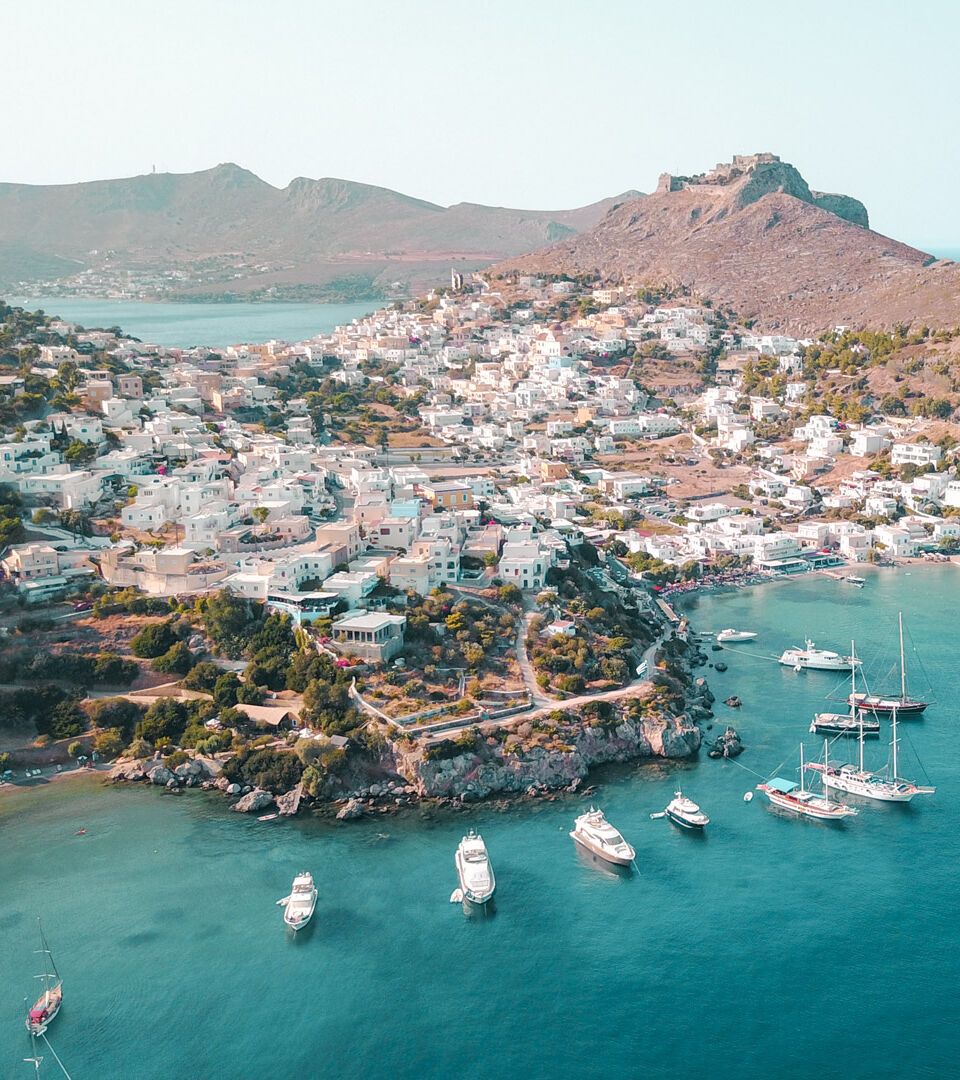
On the edge of the Aegean, Leros is one of the most distinctive and tranquil members of the Dodecanese — a true haven of peace for those who want to escape the bustle of mass tourism. With its singular architecture, deep bays and hilltop windmills, the Greek island of Leros offers visitors an intimate, nostalgic Aegean atmosphere. The island's history has given it a texture unlike other Greek islands, with wide avenues and neoclassical buildings surviving from the period of Italian rule.
Leros lies just opposite the Bodrum peninsula, hidden between the islands of Kalymnos and Patmos. Small — about 53 km² with a population of around 8,000 — yet harbouring countless stories to discover, it is also known as "the island of the goddess Artemis". If you too long for an authentic Greek island experience, want to savour turquoise waters and share in the hospitality of the locals, Leros will be exactly the right route for you.
How to Get to Leros
Reaching the peaceful atmosphere of Leros is a calmer, more boutique travel experience than the busier Aegean islands. One of the most distinctive stops of the Dodecanese, Leros is easily accessible both by ferry and by air. For travellers crossing from the Turkish coast, services from several ports make discovering the island extremely comfortable.
The ways of reaching Leros are as follows:
The Bodrum - Leros Line: The most popular route from the Turkish coast is by ferry from Bodrum. Throughout the season, ferries departing from Bodrum Cruise Port reach the island in a sea journey of about 1 to 1.5 hours.
Island Hopping: If you are on a neighbouring island such as Kos, Kalymnos or Rhodes, you can cross to Leros on the daily services of local operators such as Dodekanisos Seaways.
By Air: Leros has a small airport, and domestic flights from Athens reach the island in about 50 minutes.
Private Boat and Yacht: For those travelling on their own boats, Lakki Harbour — one of the safest and largest natural harbours in the Mediterranean — offers professional services to yachters.
Places to Visit on Leros
In terms of sights, Leros possesses a unique architectural and historical variety that sets it sharply apart from the other Aegean islands. Walking the island you will see on one side the mystical texture of the Middle Ages and on the other the traces of Italian Rationalism, one of Europe's rarest architectural movements. On this island where every settlement has its own character, the main points waiting to be discovered are:
Agia Marina: The island's most graceful face, Agia Marina welcomes you with pastel-coloured neoclassical mansions lined right along the water. This area, where traditional architecture is best preserved, is the island's administrative and cultural centre. Sit in the little cafés along the shore and watch the island's peaceful rhythm at any hour of the day.
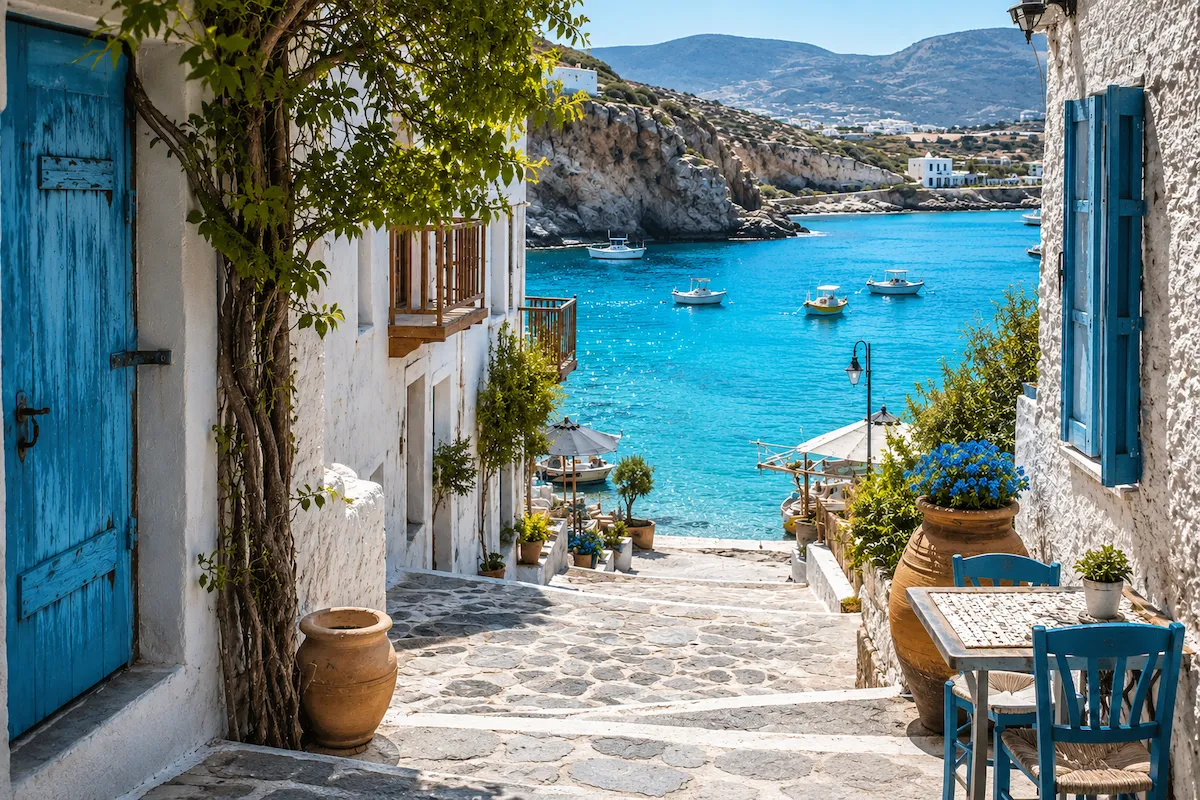
Panteli: A former fishing village, Panteli is today the island's most popular and enchanting spot. With tavernas where your feet touch the sand, a deep-blue bay and windmills on the ridge above, it makes you feel you have stepped into a classic Greek postcard. It is the island's most atmospheric stop for dinner.
Platanos: Back to back with Agia Marina, this is the island's oldest settlement. With narrow winding lanes, the historic town hall and a square shaded by centuries-old plane trees, Platanos presents the traditional life of Leros in its purest form.
The Castle of Leros (Kastro): Rising in all its majesty on Apitiki Hill above Platanos, this Byzantine castle also houses a church dedicated to the Virgin Mary (Panagia tou Kastrou), the island's patron saint. Climb the steps to the castle and the breathtaking panorama of the Aegean and the surrounding islands will make you forget all your tiredness.
Lakki: The island's main port, Lakki has a kind of town planning with few equals in the world. Designed as an "ideal city" by Italian architects in the 1930s, with its wide avenues, circular squares and art deco buildings, Lakki makes you feel you are on a film set in Italy.
Leros Beaches and Bays
The beaches of Leros unite the crystal-clear waters of the Aegean with unspoilt nature far from the crowds. Thanks to the island's indented coastline, you can find a calm bay sheltered from any wind direction:
Alinda Beach: The longest stretch of shore on the island's east coast. Lying in the shade of pine and eucalyptus trees, Alinda, with its spotless sand and shallow sea, is the first choice of families with children. Along the shore there are stylish restaurants and cafés for every budget.
Panteli Beach: A small pebble beach where you swim among the fishing boats — utterly delightful. The famous tavernas that begin right at the water's edge let you go straight from the sea to a fresh Aegean meal.
Vromolithos: Right next to Panteli, Vromolithos bay is known for its deep-blue water and peaceful character. It has both organised facilities and wide stretches where you can lay your towel and listen to the silence.
Blefouti: A hidden paradise near Partheni in the island's north, Blefouti is a completely natural, wind-sheltered cove usually favoured by locals. Tasting the home-made dishes of the bay's single taverna after a swim is a Leros tradition.
What to Eat on Leros
The cuisine of Leros is a feast where fresh produce from the sea meets the herbs and olive oil of the island's fertile land. These are the flavours that come to mind at the mention of the Greek island of Leros:
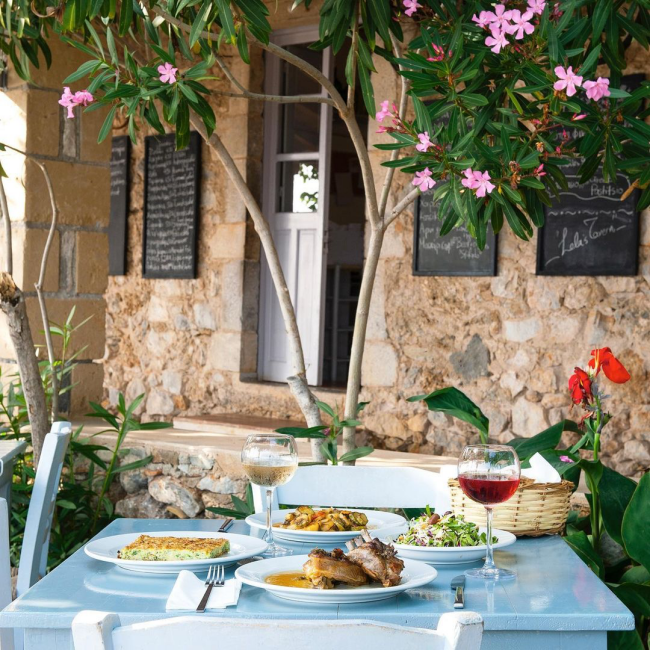
Fresh Seafood: The island's fishing heritage shows directly on the table. Especially in the tavernas of Panteli and Alinda, grilled octopus, stuffed calamari, fresh prawns and sea fish caught that very morning by local fishermen are a must.
Patsavouropita: The island's signature dessert — layers of thin pastry blended with orange syrup or yoghurt into a melt-in-the-mouth cross between cake and pie. With a scoop of mastic ice cream beside it, the taste is unforgettable.
Local Cheeses and Mezedes: "Mizithra" cheese made from the milk of animals grazing the island's hills, and mezedes such as cured mackerel (lakerda), are the finest companions to ouzo or the local wines.
Leros Wines: The white and red wines produced in the island's small but fine vineyards, with the aromatic taste given by the volcanic soil, add a unique touch to your dinners.
Frequently Asked Questions (FAQ)
Does Leros Require a Visa?
Yes — as Leros is a Greek island, Turkish citizens need a visa. Holders of a standard (maroon) passport can enter with a valid Schengen visa or, during the travel season, with the door visa scheme. You can get up-to-date information about the Leros visa process from Tilos Travel's consultants.
Can You Visit Leros in a Day?
Yes — with day tours from Bodrum it is possible to go in the morning and return in the evening. To truly feel the island's spirit, however, we recommend staying at least one night in one of the hotels of Leros.
How Do You Get Around on Leros?
The island is not large, but to roam its bays freely, hiring a car is the most sensible option; you can also enjoy the island by renting a motorbike or bicycle.
Leros is a flawless escape for those who want to find peace in the shadow of windmills, savour the silence of turquoise coves and meet true Aegean flavours. Make your plans now to discover this most intimate and unspoilt member of the Dodecanese and set off on a journey through time in its nostalgic streets.
You May Also Like→