Located in the eastern Aegean Sea, just a stone's throw from the Anatolian coast, Samos holds an exceptional place among the Greek islands with its natural beauty and deep historical heritage. The birthplace of Pythagoras, one of antiquity's greatest scientists, and of the philosopher Epicurus, the island has drawn attention throughout history for its strategic position and fertile land. One of the largest islands of the Aegean, Samos is not only for those seeking a sun-and-sea holiday; with its UNESCO World Heritage ruins, lush mountain villages and world-famous sweet wines, it also offers a rich itinerary for culture lovers.
The island's historical fabric stretches from the Heraion, the beating heart of Ionian culture in antiquity, to walled villages bearing the traces of the Middle Ages. In the modern world, Samos has managed to preserve its peaceful atmosphere, a refuge far from the chaos of mass tourism. Set at the foot of Mount Kerkis, one of the highest peaks in the Aegean, this enchanting island promises its visitors tables full of flavour beside deep-blue coves and a journey of discovery interwoven with history.
How to Get to Samos
Being one of the Greek islands geographically closest to Turkey makes Samos a very popular destination for travellers from the Turkish coast. The island is reached mainly by sea, with two main ports on the Aegean coast serving as the hubs for this journey.
Via Kusadasi Port: The fastest and most popular way to reach Samos is from Kusadasi. Ferries departing from Kusadasi Port arrive at Vathy (Samos Town), the island's capital, or at the touristic harbour of Pythagorion. The crossing takes about 45 minutes by fast ferry and around 1.5 hours by conventional ferry.
Via Seferihisar (Sigacik) Port: For those travelling from Izmir and the surrounding area, the Seferihisar-Samos line is another option, usually arriving at Karlovasi Port in the north of the island.
As the Tilos family, we operate Kusadasi - Samos ferry ticket services with a professional approach, offering our guests a comfortable crossing with fast passenger ferries. If you plan to travel with your own vehicle, it is important to complete legal requirements such as an internationally valid Green Card insurance and to book early to guarantee vehicle space. Especially in the busy summer season, current Kusadasi Samos ferry prices and timetables should be checked regularly, and tickets should be purchased in advance through our online platforms to keep your travel plans on track.
Does Samos Require a Visa?
As Samos lies within Greece, it is subject to European Union rules. However, the simplified visa procedures offered to Turkish citizens make visiting the island very attractive.
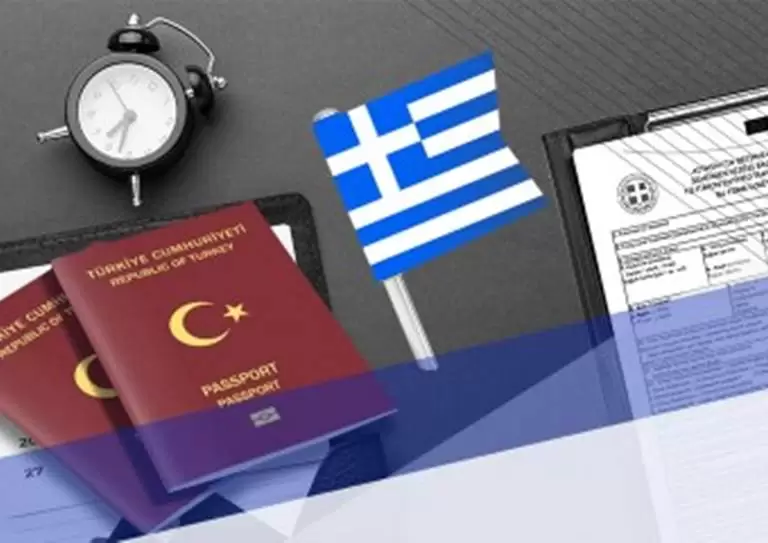
Schengen Visa: If you hold a valid Schengen visa, you can enter without any additional procedure.
Visa on Arrival (Door Visa): Valid throughout the tourism season, this system lets you travel with far fewer documents than a full visa. At Tilos Travel we provide professional support for your door visa process and handle your paperwork meticulously, so you can enjoy the island with a visa valid for up to 7 days.
Green Passport: Holders of a Turkish special (green) passport can visit Samos without any visa procedure.
Places to Visit in Samos
Samos is a large island that is far more than a coastline; every corner hosts a different historical era or natural wonder. To truly feel the island's cultural depth and aesthetic texture, there are certain places you simply must see.
Vathy (Samos Town): The island's capital and largest settlement, Vathy spreads like an amphitheatre around a wide bay. Its centre, with some of the most elegant examples of neoclassical architecture, narrow streets and flower-decked balconies, carries visitors back in time. Pythagoras Square (Platia Pythagora), the heart of the town, is symbolised by its lion statue. The Samos Archaeological Museum here is a must-see: its colossal 5.5-metre Kouros statue, one of the largest standing statues of the ancient world, reveals the island's ancient splendour.
Pythagorion: This enchanting seaside town on the UNESCO World Heritage List takes its name from the world-famous mathematician Pythagoras. Built over the ancient city of Samos, Pythagorion is today the island's most popular resort, with a chic marina where luxury yachts moor and boutique cafés lined side by side. The statue of Pythagoras at the end of the harbour, symbolising his famous theorem, is a favourite stop for photographers. The Roman baths and ancient wall remains around the town prove how modern life and history intertwine here.
The Tunnel of Eupalinos (Efpalinio Orygma): Called the "Eighth Wonder" of the ancient world, this engineering masterpiece was built in the 6th century BC. Roughly 1,036 metres long, the tunnel was carved through a mountain to supply the ancient city with water. Its most astonishing feature is that, although digging began from both ends, the two teams met in the middle of the mountain with a deviation of only a few centimetres despite the limited means of the era. A monument to the power of mathematics and geometry, the illuminated tunnel today offers visitors a unique walk-through experience.
Manolates Village: Reached by a road winding up from the north coast among nightingale song and centuries-old plane trees, Manolates is the island's most characteristic mountain village. Known as the "Valley of the Nightingales", the area is famous not only for its nature but also for its artist colonies. Strolling its cobbled lanes you will come across local artists' ceramic, jewellery and weaving workshops. Manolates also hosts some of the island's best-view restaurants; lunch here lays the endless blue of the Aegean at your feet.
Heraion (Temple of Hera): A few kilometres west of Pythagorion, this sanctuary is, according to mythology, the birthplace of the goddess Hera. One of the largest temples of the Greek world in antiquity, the Heraion once served as a pilgrimage centre with its colossal columns and architectural detail. Although only a single giant column remains standing today, the temple's foundations and the remains of the sacred way around it are a critical stop for understanding the island's millennia of religious and political importance.
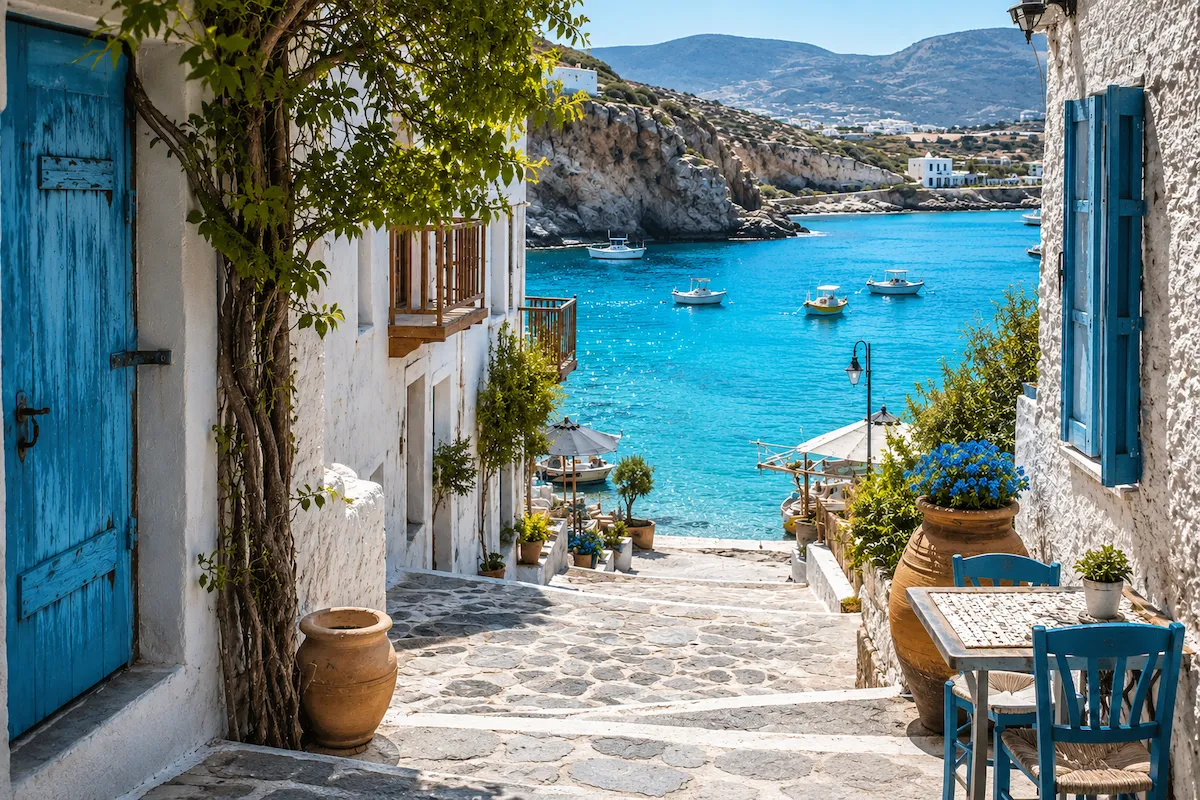
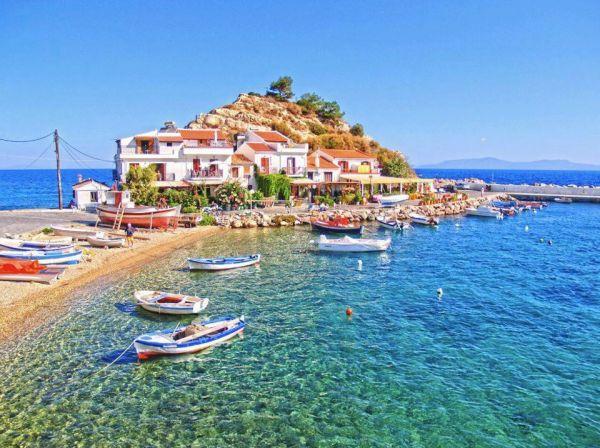
Kokkari: A former fishing village, Kokkari is today the island's most aesthetic and photogenic settlement. Its position between two small peninsulas reaching into the sea, its colourful-windowed houses and the intimate tavernas along the shore offer a quintessential Greek island atmosphere. With ideal wind conditions for surfers, the town manages to blend tranquillity and liveliness in one.
Samos Beaches and Where to Swim
The beaches of Samos are home to some of the clearest waters in the Aegean. Here are the seaside spots you must see:
Tsamadou Beach: Holding the most beautiful shades of green and blue, this beach is known for its pebble shore and crystal-clear water.
Psili Ammos: At the island's closest point to Turkey, this beach is, as its name suggests, "fine-sanded" and shallow; it is especially suitable for families.
Lemonakia: The best choice for those seeking a sheltered, peaceful, turquoise cove.
Livadaki Beach: With its shallow sea and tropical atmosphere, a favourite of the young and fun-seeking crowd.
What to Eat in Samos
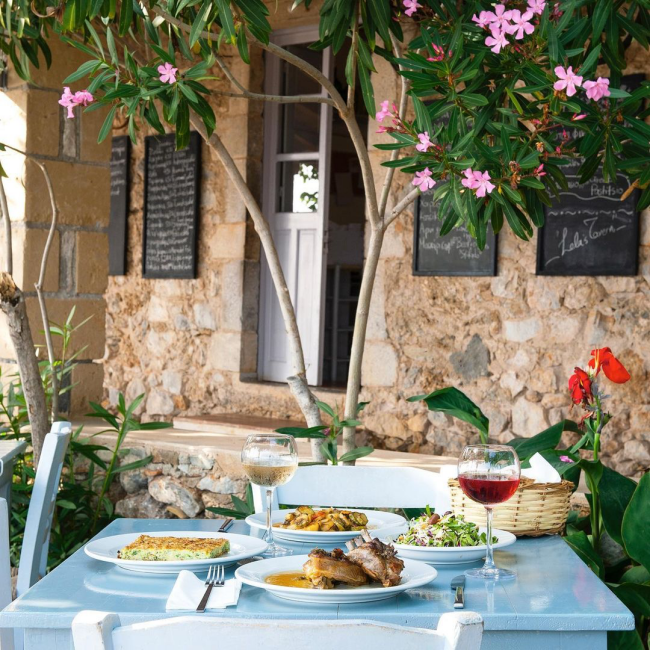
Serving the freshest examples of Aegean cuisine, Samos has a rich gastronomic culture in which local produce plays the leading role. From seafood to meat dishes, handmade pasta to cheeses, there is a flavour for every palate.
Samos Wine: The island's most important brand is its sweet wine made from Muscat grapes. Winner of worldwide awards, these wines must be tried in the local tavernas or at the wine museum.
Fresh Seafood: Grilled octopus, fried calamari, fresh fish and prawns are the staples of the seaside tavernas. The restaurants at the harbours of Pythagorion and Kokkari in particular serve the freshest seafood.
Saganaki: Pan-fried local cheese, served with honey and sesame, becomes one of Samos's signature flavours.
Dolmadakia: Vine leaves stuffed with olive-oil rice are popular on Samos as on all Greek islands, but the island's own blend of spices gives them a distinctive aroma.
Revithokeftedes (Chickpea Fritters): A local delicacy you will often find in the inland mountain villages — also a great option for vegetarians.
With all this variety, Samos is not just a holiday destination but a place to collect unforgettable memories. A short ferry ride from Kusadasi opens the doors of this magical world. For accommodation, Samos hotels and boutique guesthouses for every budget reflect the island's hospitable spirit at its best.
How Many Days Do You Need for Samos?
Given the size of Samos and everything it offers, planning your length of stay is the most important factor in the quality of your holiday. With an area of about 477 square kilometres, Samos is the eighth largest island in the Aegean, and with its rugged terrain and dozens of settlements waiting to be explored, it requires serious planning. Crossing from one end of the island to the other can take longer than expected on the winding but scenic roads.
A Day Trip to Samos: If your time is limited and you simply want to breathe the island air, a day trip can be an option. Usually arriving on the morning ferry from Kusadasi and returning in the evening, this plan lets you take a short walk through the neoclassical streets of Vathy, have lunch by the harbour, and swim at spots close to the centre such as Gagou Beach or Roditses. This option is a "taster" escape, best for shopping and a brief Greek taverna experience.
A 3-Day (Weekend) Trip: Three days are ideal for getting to know Samos in broad strokes. In this time you can add the island's three most popular pillars — Vathy, Pythagorion and Kokkari — to your route. Devote your first day to Pythagorion's historic atmosphere and museum; spend the second day enjoying the sea at the famous Tsamadou or Lemonakia beaches in the north and the evening under the romantic lights of Kokkari. On the third day, climb to the mountain village of Manolates for a bird's-eye view of the Aegean. Renting a car is strongly recommended to make the most of your time.
A 5-7 Day Stay (The Complete Samos Experience): For those who want to discover the island's true potential, hidden coves and cultural depth, a one-week stay is the right choice. In this time you can visit the Karlovasi region at the western end, hike to the Potami Waterfalls, and reach the Seitani beaches, among the island's most unspoilt spots (accessible only on foot or by boat). On this longer plan you can also visit Samos's famous wine cooperatives for tasting sessions and, with luck, catch a local festival (panigiri) to experience Greek culture at its purest. Even in a whole week, the island's 477 square kilometres will keep surprising you with somewhere new every day.
From crystal-clear coves to millennia-old engineering marvels, from appetising taverna tables to the world-famous Muscat wines, Samos tells its guests a different story at every step. Whether you plan a day trip or a week-long exploration, the island's rich cultural fabric and peaceful atmosphere will give you a holiday out of the ordinary. To make a safe and comfortable start to this enchanting Aegean stop, book your place now and set out on an unforgettable journey towards the deep blue waters of Samos.
You May Also Like→